Faculty of Business and Economics' Responsibility Centred Management (RCM) Projects
Strategic Initiatives Funds have been established as part of the University’s Responsibility Centred Management (RCM) Budget Model to provide opportunity to reinvest funds earned within a Faculty into top academic driven initiatives benefiting our students.
In response to the University Mission, the university's 2023-2026 strategic plan, the Equity, Diversity Inclusion Strategy and Action Plan, and the Algoma’s Statement on Truth and Reconciliation Commission of Canada’s Call to Action and Beyond, the faculty from the Business and Economics have launched a number of RCM project as follows:
Select Project to View Details

Select Project to View

Young Workers
Young Workers-Vulnerabilities & the Nature of Work
This project marks the reopening of an over decades long research project on the vulnerability of young workers regarding health and safety in the workplace. Over ten years ago, Profs. Denomme and Woodman engaged in research that tracked the rates of injury of young workers and assessed the causes of these injuries. At the time it was found that workplace culture had much to do with the rates of injuries and that in order to change these, elements of the culture would have to change. Coming back to the research we have revisioned the project, this time with a goal of including the concept of psychological health and safety. During the past decade, despite millions of dollars in training, rates of young worker injuries and deaths have not changed. This project will include real life experiences of our students both in working for the professors as research assistants and as engaged as participants in the research. An important part of the project is increasing the knowledge that young workers have of their rights, roles and responsibilities within the workplace with the goal of decreasing their vulnerabilities. This is particularly salient as most of our students must work to pay school fees and support themselves. We see this research project reflected in the strategic plan as we focus on lessening our students’ vulnerabilities through knowledge and education. Notably, as researchers, we come from different backgrounds and disciplines and this adds strength to our research.
Project Leads
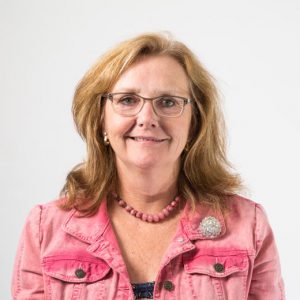
Cathy Denomme, Associate Professor of Business: Prof. Denomme is a Human Resources specialist who has both academic and real world experience in the field of health and safety. She possesses 20 years of Health and Safety experience, stemming from her ownership and presidency of Capavi Incorporated, a consulting firm specializing in custom health and safety system building and implementation and ISO auditing. A member of the Canadian Society of Safety Engineering, Cathy is the Past Chair of the national Editorial Advisory Committee for “Contact” and the new Health and Safety Research Journal. Cathy was a member of the National Leadership Team and CSSE’s Instructor Liaison Committee. Her current research interests include investigating the role universities can play in reducing workplace injury and the interaction between governments and businesses in creating a safe and healthy workplace.

Deb Woodman, Associate Professor of Social Work. Dr. Woodman has many years experience working with the qualitative methods that will be used in this project. Recently moving to Social Work, she is aware that all students need to be cognizant of their rights, roles and responsibilities when it comes to health and safety. Trained in both Anthropology and Sociology, she is particularly interested in the culture of workplaces and how they may increase or decrease worker vulnerability. Dr. Woodman has worked with Prof. Denomme previously, researching and publishing on this important topic of health and safety and how it intersects with young workers. She has also helped design pedagogical tools that we introduced at conferences on Health and Safety. Further Dr. Woodman’s research on both gender, sexuality and resource dependent communities bring a depth to this research as well as an understanding of intersectionality and how it impacts workers.
Exploration Climate Crisis
Exploration of the interplay between Climate Crisis and Migration
Movement, whether across borders or within them, has long served as a vital strategy for sustaining livelihoods and managing risks. Research indicates that by the year 2050, up to 150 million people could relocate due to environmental and climate-related challenges. This study seeks to examine the imperative for rigorous, evidence-based research to deepen our understanding of human mobility dynamics in the context of the climate crisis. [Project duration: one year].
Project Leads
Dr. Nusrate Aziz is a Professor in the Department of Finance, Economics, and Decision Sciences within the Faculty of Business and Economics. He is a Fellow of the Global Labor Organization (GLO), a member of the International Migration Research Centre (IMRC), a Research Associate with the NORDIK Institute, and an Adjunct Faculty member at Thompson Rivers University. Dr. Aziz has contributed to numerous academic journals, including the International Review of Financial Analysis, European Journal of Political Economy, The World Economy, Applied Economics, International Review of Economics and Finance, IZA Journal of Development and Migration, Journal of Cleaner Production, and Tourism Economics. His primary research interests encompass environmental policies, immigration and interprovincial migration, political institutions and governance, and international trade and finance.
Dr. Aziz’s research projects have received funding from the federal and provincial governments of Canada, Malaysia’s Ministry of Education, and the UK Department for Education. Additionally, he has worked as a consultant for a project funded by Toronto Metropolitan University and served as the principal consultant for an iDE initiative funded by the UK Department for International Development (DFID) and Australian Aid (AusAid).
Global Capital Resilience
Global Capital Resilience: Navigating Climate Dynamics and Policy Impacts
This project delves into the complex dynamics of climate risk, environmental policies, and international capital allocation. It seeks to understand how climate risk affects the responses of international investors and how government actions interact with the evolving landscape of climate risk. By exploring the relationship between policy interventions and climate risk, the project offers a thorough analysis of their collective impact on global capital flow. Through addressing these pivotal factors, the project endeavors to offer valuable insights into the determinants of international capital allocation in an era characterized by climate considerations and changing regulatory paradigms. (Project duration: 2 years)
Project Leads
Dr. Nusrate Aziz is a Professor in the Department of Finance, Economics, and Decision Sciences. He is a Fellow of the Global Labor Organization (GLO), a member of the International Migration Research Centre (IMRC), and a Research Associate at the NORDIK Institute. His research focuses on environmental policies, migration, governance, and international trade, with publications in academic journals such as the International Review of Financial Analysis and European Journal of Political Economy. Dr. Aziz’s work has been funded by Canadian, Malaysian, and UK institutions, and he has consulted on projects for Toronto Metropolitan University and international development organizations.
Dr. Robert Xu, Associate Professor in the Faculty of Business & Economics, holds a Ph.D. in Finance and a CFA charter. His research, published in leading journals like the Journal of Political Economy and Journal of Corporate Finance, has earned over 600 Google citations. Dr. Xu has supervised more than 30 master’s and Ph.D. students and serves as an academic advisor for the CFA Global Valuation Competition, bridging academic excellence with professional practice.
DeScide Centre
DeScide Centre
In an era dominated by data-driven decision-making, the DeScide Research Lab aims to cultivate a dynamic hub for research in the realms of Decision Sciences, Data Analytics, and Empirical analysis. The lab’s scope extends across these fields, recognizing their interrelation in enabling data-driven analysis and informed decision-making. Applications can include various topics and fields, which can span from refining business strategies to optimizing operations & logistics to analyzing diverse population data to shaping and evaluating economic, healthcare, and financial policies that drive societal progress. The initiative kick starts the research lab and supports the hiring of highly qualified postdoctoral researchers, who will work alongside research assistants and other researchers at Algoma University to ensure the quality of the research work while enhancing community outreach, engagement, and exposure to research. (Project Duration: 2 Years)
Project Leads
Omar Abou Kasm is an Assistant Professor of Decision Sciences. He holds a Ph.D. in Transportation Planning and Engineering from New York University, and his main research focus is on logistics optimization. His teaching interests revolve around Quantitative Methods, Management Science, and Probability & Statistics subjects. Prior to joining Algoma University, Omar worked in teaching and research at multiple institutions and worked in logistics management for project-based supply chains.
Ahmed Aziz is an Assistant Professor in the Faculty of Business and Economics at Algoma University. He holds a Ph.D. in Economics from Iowa State University and a Masters from Rutgers University. Before joining the Algoma faculty, Dr. Aziz was a NOHFC Fellow at Algoma University and served as an Assistant Professor at the University of Dhaka, Bangladesh. In his extensive academic career as an applied microeconomist, he worked on different research projects collaboratively with many organizations, including the World Bank, International Finance Corporation, and the Center for Agricultural and Rural Development, USA. His current research projects focus on the links between migration decisions and welfare generosity, the intergenerational effects of welfare programs, and the effect of public opinions on the immigrant-native wage gap. Dr. Aziz is also co-leading a community-based action research project investigating the Algoma region’s blue economy and freshwater entrepreneurship opportunities.
Freshwater Blue Economy
Blue Economy Strategy
Located in the nexus of the upper Great Lakes, we connect to 20% of the planet’s freshwater. Engaging our local community is critical to co-creating actions to rehabilitate our freshwater. This transdisciplinary community-based participatory research aims to investigate challenges and opportunities of freshwater health, along with social, economic, and cultural skills. We intend to strengthen intersectoral relationships between First Nations, educators, scientists, climate action groups, etc., in forming a freshwater strategy locally to address Truth and Reconciliation Calls for Action, while also collaborating with international partners. An Indigenous community-based approach would engage ALL peoples and participants in dialogues intended to co-create collective actions to form the basis for crafting a blue community strategy from an Indigenous worldview with input from Western science and community perspectives. (Project Duration: 2 Years)
Project Leads
Ahmed Aziz is an Assistant Professor in the Faculty of Business and Economics at Algoma University. He holds a Ph.D. in Economics from Iowa State University and a Masters from Rutgers University. Before joining the Algoma faculty, Dr. Aziz was a NOHFC Fellow at Algoma University and served as an Assistant Professor at the University of Dhaka, Bangladesh. In his extensive academic career as an applied microeconomist, he worked on different research projects collaboratively with many organizations, including the World Bank, International Finance Corporation, and the Center for Agricultural and Rural Development, USA. His current research projects focus on the links between migration decisions and welfare generosity, the intergenerational effects of welfare programs, the effect of public opinions on the immigrant-native wage gap, and blue economy and freshwater entrepreneurship opportunities in the Upper Great Lake region.
Dr. Jody-Lynn Rebek, Associate Professor FoBE is a sustainability researcher and social entrepreneur. For many decades, she’s supported transformation efforts that renew focus, hotistic well-being, hope, and growth for organizations and communities. She specializes in engaging diverse stakeholders to develop evidence-based, practical solutions and results-oriented action plans via compassionate cultures (EDI). She engages in community-led research that integrates Truth and Reconciliation and cross-cultural learning. Jody has over 30 years of management expertise, she understands the transdisciplinary perspectives required for efficient and sustainable solutions and leadership. She co-led the creation of the local network, Water Wise, and Algoma’s zero-waste refillery, Hearterra, a social enterprise that encourages sustainable consumption. She has several accolades including a Global Affairs Faculty Mobility Partnership Grant, SSHRC Canada Graduate Scholarship, and Governor General’s Canadian Leadership Conference, along with gaining the Athena award, Innovative Educator, and Community Builder for the Environment awards.
Indigenous Case Studies in Business Curriculum
Indigenous Case Studies in Business Curriculum
The Faculty of Business and Economics is making a noted mission to include more Indigenous case studies in our curriculum thereby advancing Algoma University’s special mission. The priority in this initiative is to provide training to faculty members to teach case studies and specifically Indigenous case studies as there is a lack of Indigenous case studies that can be used within an undergraduate and graduate business curriculum and even fewer case studies with a Northern setting.
Secondly, the initiative will serve to allow faculty members to engage the Indigenous business communities in Sault Ste. Marie and Brampton in dialogue to foster relationships with both profit and non-profit organizations with the intent of developing rich Indigenous business cases for the classroom.
Project Lead

Dr. Jo-Anne Ryan obtained her Chartered Accountant (CA) Designation in 1991 and articled with KPMG LLP and subsequently received her Chartered Professional Accountant (CPA) Designation. Shortly after leaving public accounting to pursue an academic career at Nipissing University in North Bay, Ontario, Dr. Ryan began PhD studies at the University of Birmingham, UK. In 2011, Dr. Ryan completed her PhD in accounting at the University of Birmingham. Her thesis employed a case study approach to explore the rules and routines that have evolved within the Investor Relations (IR) functions of a large Canadian public company from the inception of their IR website in 1997 to 2010 utilizing weblog analysis and an institutional framework. Dr. Ryan also holds a Data Management Certificate from the Chartered Professional Accountants of Canada.
Dr. Ryan has served as an accounting professor and Department Chair at several universities including Nipissing, Lakehead University, Laurentian University and Algoma University where she is currently a faculty member. She teaches a variety of accounting and auditing courses at all levels. She has a strong interest in accounting education and preparing accounting students who wish to pursue their CPA designations upon graduation. Her students have prepared, and delivered, education seminars to the local business community.
Dr. Ryan has served as President on her local CA Board and as a volunteer board member on several not-for-profit organizations. She has delivered financial literacy courses developed by CPA Canada to her local community and has spoken at Rotary Club events. She taught at the School of Accountancy held annually at York University and continues to work with both CPA Ontario and CPA Canada as a team lead, standard setter, and case writer.
Dr. Ryan has published articles in peer reviewed journals that focus on accounting unification and assurance case. She is co-author of Financial Accounting Cases (Wiley Publishing) that is now in its third edition and continues to write cases for both publication and classroom use. She is a reviewer for Accounting Perspectives. Dr. Ryan has a strong classroom and research interest in emerging technologies including data analytics.
Esports Training and Educational Lab
Esports Training and Educational Lab
The Esports Certificate and Specialization within the Bachelor of Business Administration program at the Faculty of Business and Economics (FoBE) offer 10 courses. The School of Computer Science and Technology, particularly in the Brampton campus, has witnessed rapid growth, surpassing the current lab’s capacity to serve 2000 students. Moreover, the newly established Algoma Unity Centre of Excellence will serve as a hub for AI, VR, and AR research, necessitating a specialized lab with high-end equipment.
This proposed lab presents opportunities for collaborative projects between Business and Computer Science faculty and students, potentially leading to double degrees or interdisciplinary master’s degrees in Esports and Gaming design. Moreover, the lab will enhance the institution’s reputation by hosting community events, attracting IT companies, and fostering research and co-op opportunities in gaming, VR, and AR. It will also support internationalization efforts and domestic partnerships with colleges offering Esports and computer science programs.
This lab will offer extra-curricular activities to students in School within School project and will become a community center for Brampton residents. In specific, this lab will be a:
1) Hub for students in Business of Esports and Video Game Design (Computer Science).
2) Center for training and research in Gaming/AR/VR.
3) Community hub in Brampton, especially for School within School students.
4) Training ground for Algoma Esports athletes and School within School students.
5) Venue for hosting annual Esports tournaments and programming contests.
6) Exhibition space for showcasing Esports/VR/AR technology and video games.
Project Leads
Computer Science Lead – Dr. Simon Xu
Dr. Simon Xu, Professor & Director, Faculty of Computer Science and Technology (SSM campus)
Dr. Simon Xu is a Professor in the School of Computer Science and Technology, and he has held the position of School Director/Department Chair since 2009 except when he took sabbatical. Prior to his tenure at Algoma, he was working in the School of Computer Science, University of Windsor, Canada. Additionally, he serves as a guest professor at Wuhan University. Dr. Xu earned his Ph.D. degrees from Wayne State University, United States, and the University of Liege, Belgium. His research focuses on software evolution, software development, program comprehension, and data analytics. Dr. Xu has published more than 90 articles in refereed journals and conference proceedings and eight authored/co-authored books. He has chaired ten IEEE international conferences and served as the editorial board member for six international computer science journals. He has been invited to deliver seven keynotes at IEEE conferences. He is a senior member of IEE
Business Co Leads – Cathy Denomme and Aaron Gordon Professor Cathy Denomme, Associate Professor, Faculty of Business and Economics (SSM campus)
In 2018, Cathy was seconded by the President into the role of Director of the School of Business and Economics. In this role she was responsible for the strategic growth and advancement of the SchoolBE on both the Sault Ste. Marie and Brampton campuses. Operating as a self-directed unit, Cathy was responsible for the oversight of both the academic programming and the operations of the SchoolBE. This includes oversight for, and the development and implementation of The Business of Esports Programming. This is the first university Esports programming in Canada offering both a specialization in the Bachelor of Business Administration and a certificate in The Business of Esports. Cathy has worked with industry experts and developed a partnership with Amuka to assist in the development of creating permanent esports venues on our campuses.
Dr. Aaron Gordon, Associate Professor, Faculty of Business and Economics (SSM campus)
Dr. Aaron Gordon currently serves as an Associate Professor in the Faculty of Business and Economics at Algoma University. He has served in various capacities, including Academic Leads, and former Faculty Chair. Aaron is equipped with a PhD (2013) in Project Management, holds the globally recognized Project Management Professional (PMP®) designation, and is an active member of the Project Management Institute (PMI®). At Algoma University, he provides academic oversight in maintaining accredited specializations and has experience in curriculum development. Aaron has published in project management, presented PM topics at conferences, and currently engaged in research that focuses on project management methodologies in the business of geo-thermal energy sectors. He is a certified consultant of Birkman International and previously served as a Project Manager of healthcare integrations, under the Ontario Ministry of Health and Long Term Care.
Other Lead – Dr. Miguel Garcia-Ruiz, Associate professor, School of Computer Science and Technology (SSM campus)
Dr. Miguel Garcia-Ruiz received his PhD in Computer Science and Artificial Intelligence from the Centre for Cognitive Science (COGS), University of Sussex, UK. Dr. Miguel has published technical books on video game technology, microcontroller boards, and systems testing, and published many scientific papers on software testing, AI, and human-computer interaction in academic journals and conferences. Dr. Miguel was a Visiting Professor at Ontario Tech University, where he participated in a research project on combating social deviations with technology. Currently, Dr. Miguel Garcia-Ruiz is an Associate Professor with the School of Computer Science and Technology from Algoma University, Canada. He was awarded the Innovation Educator of the Year, given by the Sault Ste. Marie Innovation Centre (SSMIC) in 2015.
BRIDGE Lab
BRIDGE Lab: Student Engagement in Transdisciplinary Research, Cross-cultural Learning and Community Outreach
The BRIDGE Lab was born out of a shared interest in mentorship, community-based research, and outreach. Students participate in a dynamic scholarly community, explore real world research applications, and embrace opportunities for personal growth. The lab provides an enriching space for students to not only learn about ongoing faculty-led research, but that also fosters a sense of community among students and faculty across departments. Interdisciplinary faculty and professional members join forces to conduct research both locally and globally, and actively engage with communities, promoting practical and meaningful change. This is a joint faculty, and cross department initiative. BRIDGE has partnered with Kiwanis and is now an official CKI club. Circle K International (CKI) is one of the world’s largest student-led collegiate service organizations, with thousands of members on hundreds of campuses across the globe. The collegiate branch of the Kiwanis International family, CKI is committed to developing leaders by offering unique service, leadership and fellowship opportunities that change the world and the lives of our members. BRIDGE Lab also has other third-party partnerships such as Cooperathon, and the SDG Hub.
Project Leads

Dr. Rebek is an Associate Professor at Algoma University’s School of Business and Economics and a dynamic social entrepreneur, having co-founded initiatives like Hearterra and Waterwise. With over a decade leading Vive Strategy Consulting, she’s a passionate transdisciplinary researcher, leveraging both qualitative and quantitative methods in her community-based action
research. Her work delves into diverse subjects, including cross-cultural understanding, decolonizing education, sustainable management, and transformative leadership, all aimed at fostering well-being, inclusivity, and motivation.

Dr. Bruni is a Paediatric Psychologist with expertise in integrated care, school psychology, and applied behaviour analysis. Her research interests include evaluating the effectiveness of single-session mental health interventions, the use of professional task-shifting to increase access to mental health support, and the promotion of psychological flexibility in youth. She is focused on establishing a program of research that is responsive to the needs of the community and aligns with ongoing mental health initiatives. Dr. Bruni is a licensed Psychologist in the state of Michigan and is currently in the process of pursuing her registration in Ontario.
FoBe Innovations
UNLEASH Canada 2025, YT
FoBE Innovations and Indigenous Collaborations
‘UNLEASH’ is a travelling global innovation hub centred around progressing social and environmental change in various host regions around the world. UNLEASH leverages a global network to empower and enable next-gen activators to effect positive change for Northerners – and the planet. UNLEASH Hacks are local innovation sprints for youth 18-34 to address their region’s Sustainable Development Goals (SDGs). The Hacks are organized by members of the UNLEASH Community and provide participants with the right tools and skills to develop new ideas and solutions with positive local impact. This compact program will enable participants to explore their creativity and discover tools for developing innovative ideas in just two days. Hosted in Whitehorse, YT in March of 2025, the first UNLEASH Canada Hack focuses on challenges specific to Northern Communities. Twenty youth from the Algoma region will attend UNLEASH Canada under a full scholarship sponsored by Algoma University’s FBE, alongside a small group of staff and faculty led by Dr. Jody Rebek, who will support and observe the UNLEASH innovation hack methodology. Upon return to the Algoma region, youth will collaborate to adapt their ideas and strategies from the Yukon event to address regional priorities identified in Algoma.
Project Leads
Dr. Jody-Lynn Rebek, Associate Professor FoBE is a sustainability researcher and social entrepreneur. For many decades, she’s supported transformation efforts that renew focus, hotistic well-being, hope, and growth for organizations and communities. She specializes in engaging diverse stakeholders to develop evidence-based, practical solutions and results-oriented action plans via compassionate cultures (EDI). She engages in community-led research that integrates Truth and Reconciliation and cross-cultural learning. Jody has over 30 years of management expertise, she understands the transdisciplinary perspectives required for efficient and sustainable solutions and leadership. She co-led the creation of the local network, Water Wise, and Algoma’s zero-waste refillery, Hearterra, a social enterprise that encourages sustainable consumption. She has several accolades including a Global Affairs Faculty Mobility Partnership Grant, SSHRC Canada Graduate Scholarship, and Governor General’s Canadian Leadership Conference, along with gaining the Athena award, Innovative Educator, and Community Builder for the Environment awards.
Influence of Public Opinion
Influence of public opinion on the immigrant-native wage gap
For a long time, concerns about the economic impact of immigration, including fears of immigrants “stealing jobs,” driving down wages and increasing pressure on public spending, have shaped public perceptions towards immigrants. However, such perceptions of immigration may be completely disconnected from the actual effects of immigration, all the while potentially playing an important role in determining a disadvantaged wage structure for immigrants. This research will employ natural language processing (NLP) and machine learning to gather digital trace data, measuring immigration sentiment and will use advanced econometric methods to explore how this sentiment relates to the immigrant-native wage gap in top immigrant-hosting Global North nations. (Project Duration: 2 Years)
Project Leads
Ahmed Aziz is an Assistant Professor in the Faculty of Business and Economics at Algoma University. He holds a Ph.D. in Economics from Iowa State University and a master’s from Rutgers University. Before joining the Algoma faculty, Dr. Aziz was a NOHFC Fellow at Algoma University and served as an Assistant Professor at the University of Dhaka, Bangladesh. In his extensive academic career as an applied microeconomist, he worked on different research projects collaboratively with many organizations, including the World Bank, International Finance Corporation, and the Center for Agricultural and Rural Development, USA. His current research projects focus on the links between migration decisions and welfare generosity, the intergenerational effects of welfare programs, and the effect of public opinions on the immigrant-native wage gap. Dr. Aziz is also co-leading a community-based action research project investigating the Algoma region’s blue economy and freshwater entrepreneurship opportunities.
Dr. Rahman is an assistant professor in the Faculty of Computer Science and Technology at Algoma University, Sault Ste Marie, ON, Canada. He also holds an adjunct assistant professor position at the School of Computer Science at the University of Windsor, ON, Canada. He obtained his Ph.D. from the School of Computer Science at the University of Windsor, ON, Canada, in 2020. Dr. Rahman completed his second master’s in Computer Science degree from the Department of Mathematics and Computer Science at the University of Lethbridge, Lethbridge, AB, Canada. He obtained his master’s and bachelor’s degrees in Computer Science and Engineering from Jahangirnagar University, Dhaka, Bangladesh. Dr. Rahman has also worked as a Software Engineer in Bangladesh and Canada for three years.